
Walk through almost any hospital and you’ll see nurses doing extraordinary work.
They’re administering medications, monitoring patients, communicating with physicians, responding to changing conditions, documenting care, coordinating treatment, answering questions, and caring for multiple patients throughout a shift.
But there’s something patients may need that isn’t a medical procedure at all.
Time with another human being.
Time to talk.
Time to tell a story.
Time to play a game.
Time to watch a favorite program with someone.
Or simply time to have another person sitting nearby.
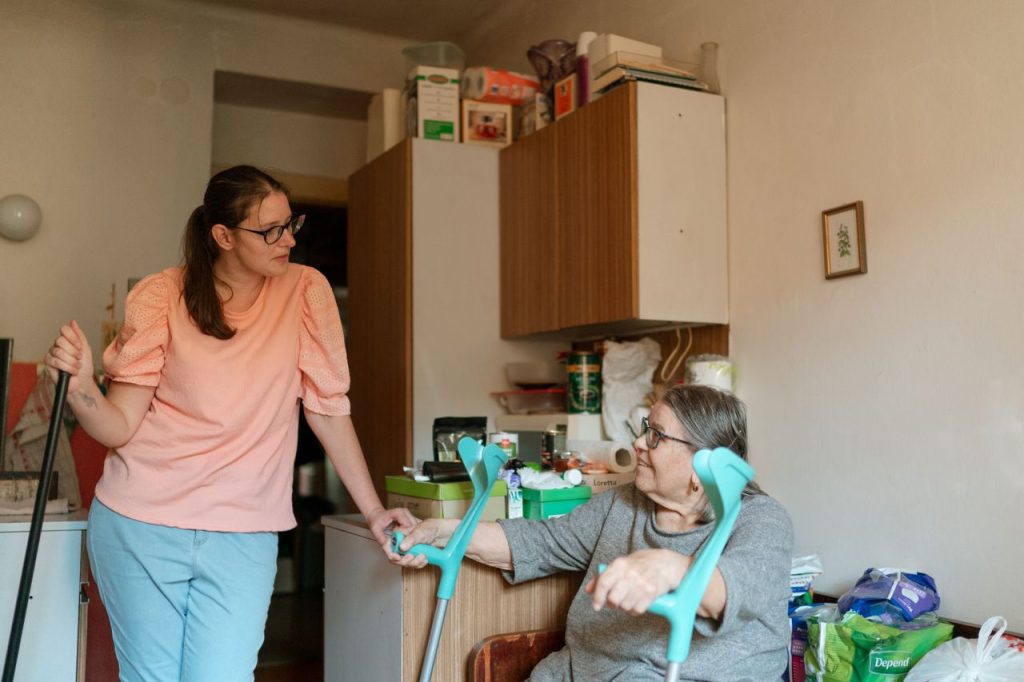
That’s where companionship can serve a very different role.
A Nurse and a Companion Have Different Jobs
It’s important not to confuse the two.
A nurse is a trained healthcare professional responsible for clinical care.
A companion isn’t a nurse.
A companion isn’t there to administer medication, monitor medical conditions, provide personal care, make clinical decisions, or perform the responsibilities of hospital or facility staff.
The role of a companion is much simpler:
To provide human presence and social connection.
These roles shouldn’t compete with each other.
They serve fundamentally different needs.
Hospitals Can Be Busy—and Hospital Rooms Can Still Feel Lonely
Hospitals are full of people.
Doctors walk in and out.
Nurses check vital signs.
Technicians perform tests.
Meals arrive.
Machines beep.
Yet a patient can still spend long stretches of the day without meaningful social interaction.
Being surrounded by people isn’t necessarily the same as having company.
A healthcare professional may enter the room because something needs to be done.
A companion enters because someone wants to spend time with the person in the room.
That’s an important difference.
What Can a Hospital Companion Do?
Depending on hospital or facility policies and the individual’s circumstances, companionship might involve:
- Having a conversation
- Listening to stories
- Reading together
- Playing cards or another simple game
- Watching a movie or television program together
- Listening to music
- Sharing appropriate hobbies or activities
- Helping pass the long stretches of time between family visits
- Simply sitting together
Sometimes the most meaningful thing a companion can bring into a hospital room isn’t an activity at all.
It’s attention.
Companionship Doesn’t Replace Healthcare
This distinction is central to the idea of hospital companionship.
If someone requires medical attention, the appropriate healthcare professional should provide it.
If a patient needs assistance outside the companion’s role, the companion should seek help from the appropriate facility staff rather than attempting to provide that assistance themselves.
Companionship should complement the environment around a patient—not interfere with or substitute for professional care.
Families Can’t Always Be There
Most families would love to spend as much time as possible with someone they love during a hospital stay.
Reality can make that difficult.
They may have jobs.
Children.
Other family responsibilities.
They may live in another city or another country.
A hospitalization may continue for days or weeks.
Sometimes family members simply need to go home and sleep.
That doesn’t mean they want the person they love spending every remaining hour alone.
A companion can provide an additional source of human connection during some of those times.
Not instead of family.
Alongside family.
The Person Behind the Patient
Hospitals understandably focus on diagnoses, treatment plans, medications, procedures, and recovery.
But every patient is also a person.
Someone loves music.
Someone spent 40 years teaching.
Someone follows every Eagles game.
Someone has traveled the world.
Someone loves old Hindi movies.
Someone wants to talk about their grandchildren.
Someone would rather discuss anything except their illness.
Companionship creates space for that part of the person.
For a little while, the conversation doesn’t have to be about symptoms, tests, medications, or what happens next.
It can simply be about life.
Two Different Needs. Two Different Roles.
We shouldn’t expect nurses to replace family, friends, or social relationships.
And we shouldn’t expect companions to replace nurses or other healthcare professionals.
Both distinctions matter.
At SitByYou, we believe companionship can add something different to a hospital or residential-care experience: meaningful human presence when family and friends can’t always be there.
The medical team can focus on providing professional care.
The companion can focus on the person.
And sometimes, simply having someone there makes a long day feel a little less long.